

Do you suspect your child has ADHD (attention deficit hyperactivity disorder)? ADHD symptoms in kids are typically categorised as displays of either inattention or hyperactivity, but there is also plenty of overlap.
In this article, we explain some of the most common symptoms of ADHD in children, and suggest steps that you can take to provide your child the support they need.
ADHD is a developmental disorder that affects individuals from childhood all the way through to adulthood.
The way ADHD symptoms present fall into three categories:
ADHD is a complex disorder; scientists have yet to pinpoint exactly what causes it. However, research suggests that genetics plays a key role, particularly as it affects the transmission of dopamine (a neurotransmitter that drives our brain’s reward system).
The severity of ADHD symptoms and their impact on one’s life can vary greatly from one person to another.
These are the ways in which ADHD symptoms most commonly affect children:
Children with ADHD may find it difficult to pay attention in school, particularly in subjects that they don’t find interesting. They may make careless mistakes, such as in their schoolwork or other tasks despite actually knowing the correct answer or manner of performing the task.
The child may display excessive physical movement; they may find it difficult to sit still, or stay in one place.
Impulsiveness in children can manifest in a wide range of behaviours, such as:
Because their brains are still developing, children in general are not yet very good at regulating their own emotions. However, those with ADHD may find it especially difficult, and may be more prone to emotional outbursts, irritability, and frustration.
Children with ADHD might find it difficult to follow through or sustain their efforts. You might find them to be enthusiastic upon starting a task or project, then lose motivation partway through, before eventually abandoning the task entirely.
Children with ADHD may be prone to misplacing their belongings, or forgetting tasks that they have been instructed to do.
ADHD symptoms in kids, if left unmanaged, may affect the child developmentally, emotionally, and even socially.
Trouble paying attention in class and completing assignments may lead to poor grades or failing their classes. This can lead to shame and frustration for the child, and later on can also affect their academic prospects.
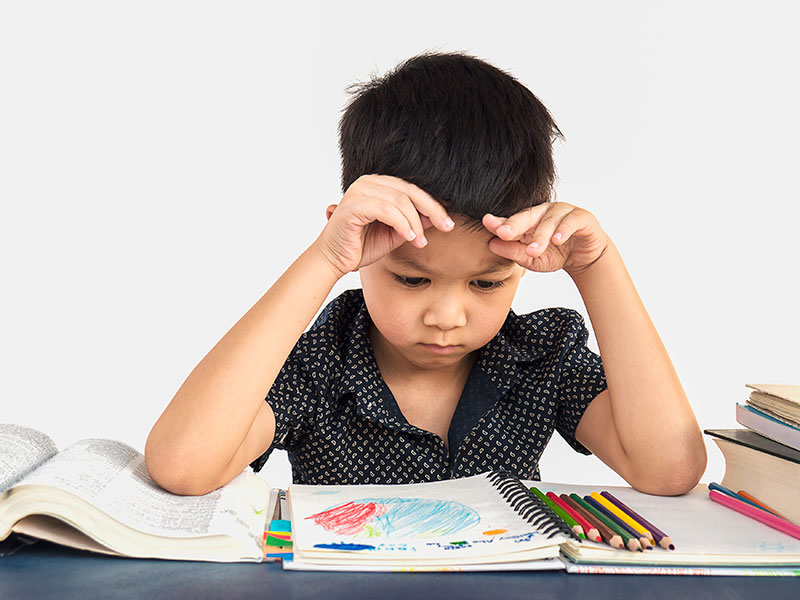
Difficulty in focusing or sustaining effort on schoolwork is one of the most common ADHD symptoms in kids.
Impulsive behaviours may make it difficult for your child to make and keep friends.
If a child with ADHD remains undiagnosed and without proper support, their negative experiences and interactions with others may shape the way they view themselves, in a detrimental way.
Unaware of the causes of their behaviour, they may mistakenly believe their inattentive symptoms are laziness or ineptitude; they may grow up thinking they are unlikeable or bad people because their impulsive behaviour has strained their interpersonal relationships.
It’s important to note that just because a child gets bored easily in class, or shows impulsive behaviours, does not mean they have ADHD.
If you suspect that your child has ADHD, a formal diagnosis from a mental health professional will be the first step.
Your family doctor or your child’s paediatrician may be a good place to start; they can refer you to a child psychologist who can perform a comprehensive evaluation.
Be aware that assessing for ADHD is a process that can take weeks, if not months. It will involve a series of interviews, behaviour observations, and questionnaires, in order for the psychologist to diagnose your child.
The treatment and support that will best benefit your child will depend on their individual symptoms and needs.
Supporting a child with ADHD is a combined effort between healthcare providers and family caregivers. Here are some of the most common ways:
Behavioural therapy
A qualified professional such as a paediatric occupational therapist can help the child develop coping mechanisms, as well as manage impulsive and inattentive behaviours.
Sensory therapy
For children who struggle with sensory processing, therapists use structured, play-based activities to help them better process and respond to sensory input, such as tolerating loud noises or visually overwhelming environments.
Parent training
A therapist can teach the child’s parents or guardians strategies for managing the child’s behaviour and improving child-parent interactions.
Medication
A psychiatrist may prescribe medication for managing the child’s symptoms. (In Australia, non-medication treatment is generally recommended under the age of 7.
Lifestyle adjustments
The child’s family may be advised to instill certain lifestyle changes that may help, such as:
Our licensed paediatric occupational therapists are here to help your child develop essential life skills, improve focus, and build confidence through personalized therapy sessions.
Get in touch through this form or call us at 02 8808 4000 to enquire!